
Panama City to Cartagena: Should You Fly or Sail?
Panama City and Cartagena are geographically close, but traveling between Panama and Colombia comes with one unusual detail: there is no continuous road connecting the two countries. The Pan-American Highway is interrupted by the Darién Gap.
If Cartagena is your final destination, the two most direct options are to fly or sail there.
Flying is fast, convenient and usually cheaper. Sailing takes five to six days and costs more, but also takes you through the San Blas Islands, combining transportation, accommodation and a Caribbean sailing adventure in one trip.
So, should you fly or sail from Panama City to Cartagena? Let’s compare travel times, costs, logistics and what each option offers, so you can decide which makes the most sense for your itinerary.
Table of Contents
- Flying vs Sailing from Panama City to Cartagena: A Quick Comparison
- Flying from Panama City to Cartagena: Travel Time and Costs
- Sailing via San Blas: Experience, Duration and Costs
- How Does the Panama to Cartagena Sailing Route Work?
- Should You Fly or Sail?
- Who Should Sail Instead of Fly?
- Frequently Asked Questions
1. Flying vs Sailing from Panama City to Cartagena: A Quick Comparison
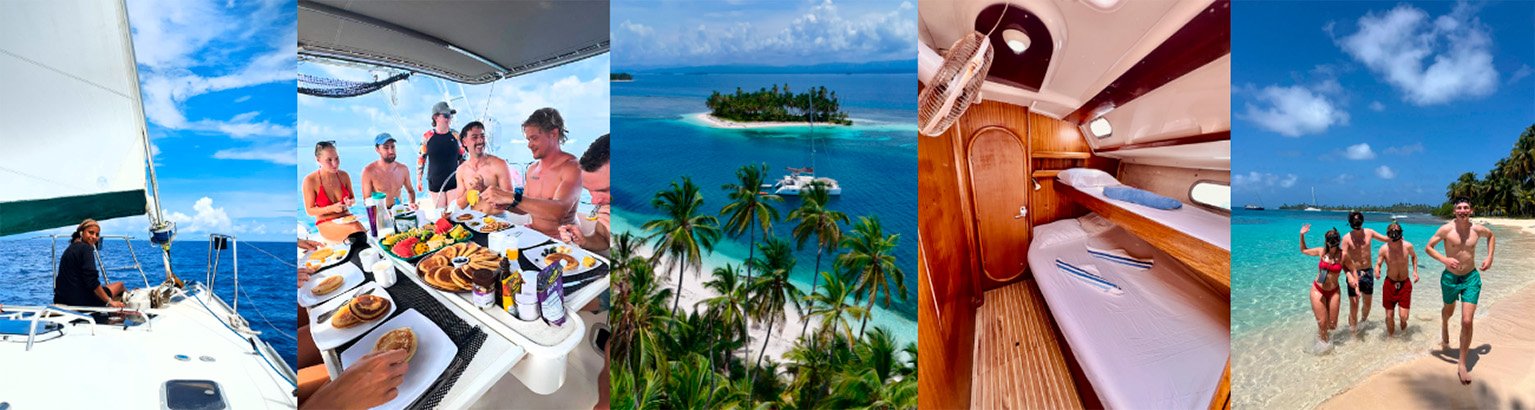
Both options connect Panama and Colombia, but they’re designed for very different travel plans.
| ✈️ Fly | ⛵Sail via San Blas | |
| Travel time | Around 1h20 in the air, plus airport procedures and transfers | 4–5 nights, depending on the boat and sea conditions |
| Price | Usually cheaper, varies by airline, date and season | Higher upfront cost; varies by boat, cabin, season and offers |
| Route | Panama City to Cartagena | Panama City → Caribbean coast → San Blas Islands → Cartagena |
| Alojamiento | ¿Qué no incluye? | Your boat becomes your floating home |
| Meals | Depend on airline and fare | 3 meals a day included plus coffee, tea and water |
| las Islas de San Blas | No Incluye | 3 days exploring the islands |
| Open-sea sailing | No | Approximately 24–52 hours, depending on sea conditions |
| Main purpose | Get to Cartagena | Turn the journey into the adventure |
| Experience | Transportation | Sail the Caribbean with a multi-day island-hopping tour |
| Best for | Short trips, fixed plans and lower-cost transport | Travelers with time to discover an untouched tropical paradise |
The biggest difference isn’t just the travel time. Flying takes you directly to Cartagena, while sailing adds several days exploring a destination you would otherwise miss.
But there are practical considerations too. Here’s what each option looks like in more detail.
2. Flying from Panama City to Cartagena: Travel Time and Costs
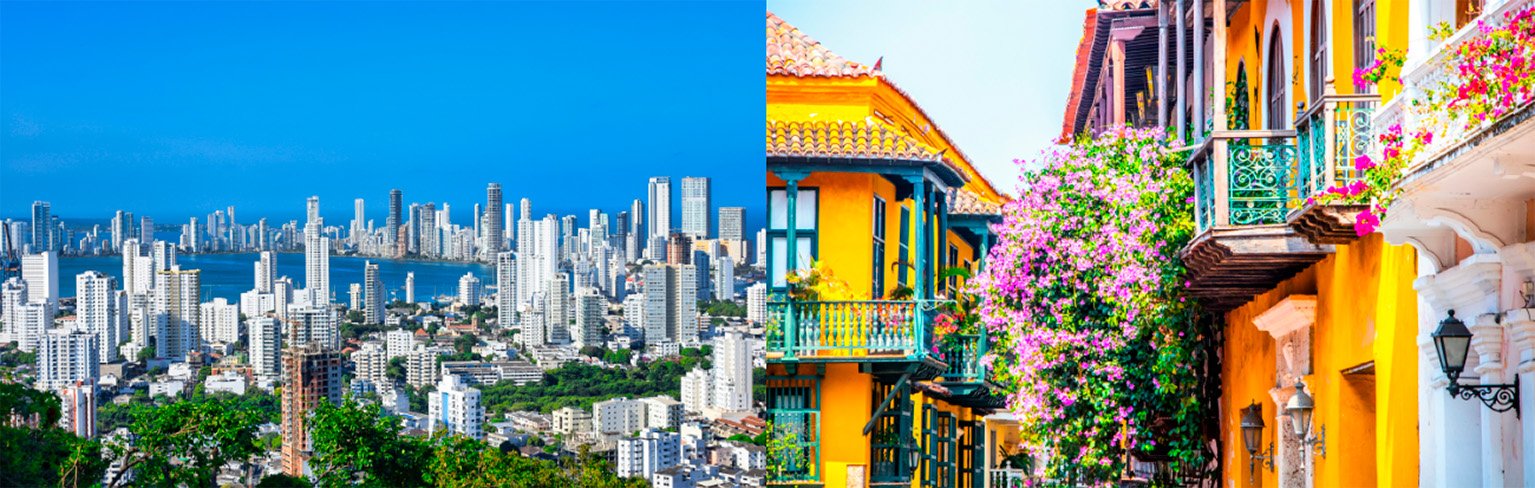
If your priority is getting to Cartagena quickly, flying is the most practical option.
Direct flights between Panama City and Cartagena take approximately 1 hour and 20 minutes in the air. Copa Airlines operates flights from Tocumen International Airport (PTY) to Cartagena’s Rafael Núñez International Airport (CTG), while Wingo offers low-cost flights from Panama Pacífico Airport (BLB). Avianca also sells itineraries between both cities, although these may involve a connection depending on the date and schedule.
Flight frequency varies by airline and season. Low-cost services may only be available one day a week, so it’s worth checking which airport and departure schedule fit your plans.
One useful tip: always check the airport code before booking. PTY and BLB are different airports, and getting to the wrong one can seriously complicate your travel day.
How long does flying actually take?
Although the flight itself is short, you’ll also need to account for:
- Transportation from your accommodation to the departure airport.
- Check-in, security and immigration procedures.
- Boarding time and possible delays.
- Immigration, baggage collection and transportation into Cartagena.
So while flying is significantly faster than sailing, the total journey takes longer than the time shown on your flight ticket.
How much does it cost to fly?
Airfares vary widely depending on the airline, season, availability and how early you book.
Low-cost airlines such as Wingo sometimes offer one-way fares for under US$100, while full-service fares and peak travel periods can cost several hundred dollars.
But there’s a catch with the cheapest tickets: baggage isn’t always included. Wingo’s GO BASIC fare, for example, only includes a small personal item, such as a backpack or handbag that fits under the seat. A larger cabin bag or checked suitcase costs extra.
If you’re backpacking through Latin America or traveling with a suitcase, those additional baggage fees can make a noticeable difference to the final price. Higher fare categories may include more luggage, so always compare the total cost rather than the advertised ticket price alone.
For travelers with limited vacation time, fixed plans or a tight budget, flying often remains the most practical option.
3. Sailing from Panama to Cartagena via San Blas: Experience, Duration and Costs
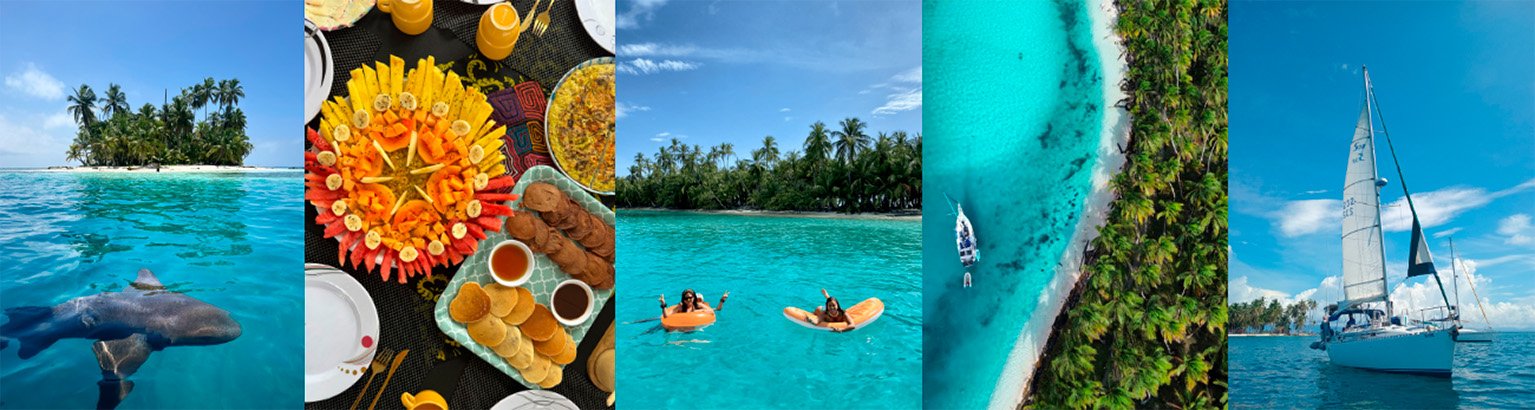
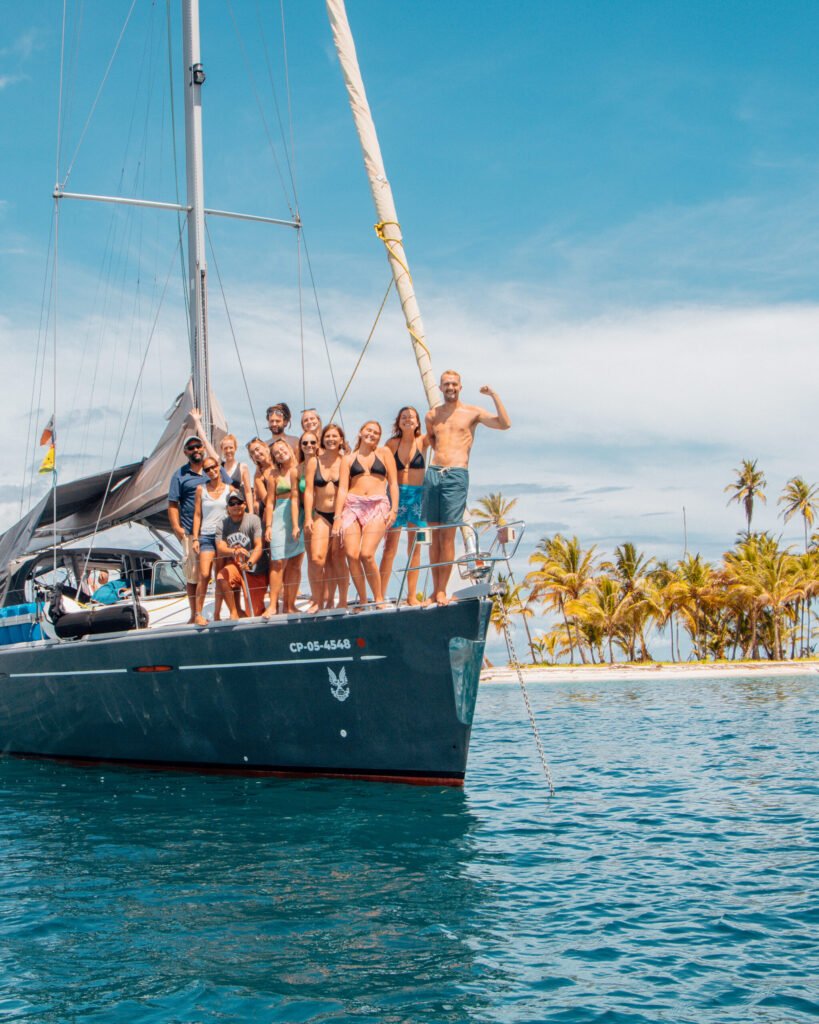
Sailing from Panama to Cartagena isn’t simply another way to cross the border. It’s a 4–5-night journey through the San Blas Islands and across the Caribbean Sea, with various days dedicated to exploring the archipelago.
For travelers moving between Central and South America, this means discovering San Blas without having to plan a separate island vacation.
Exploring San Blas along the way
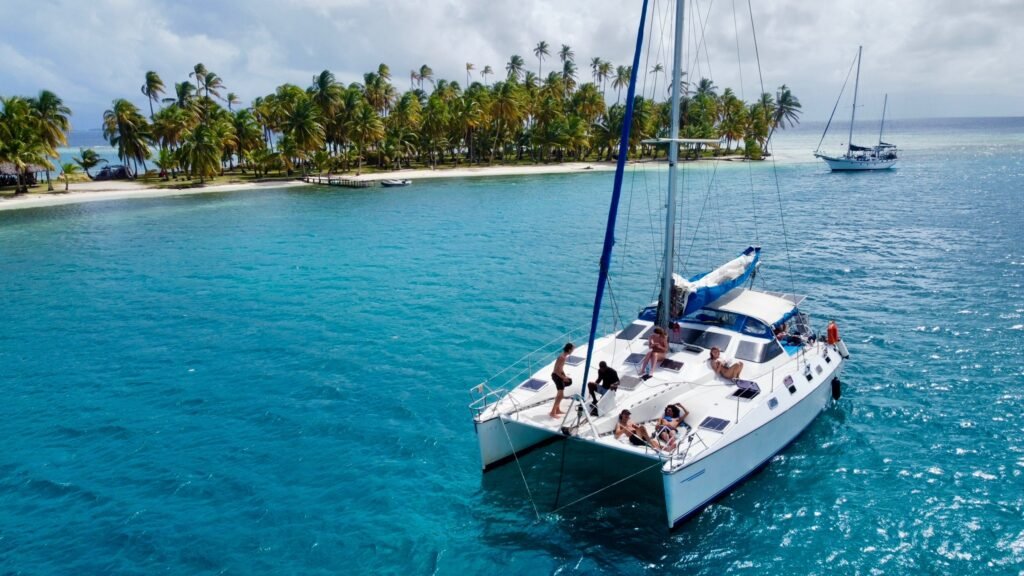
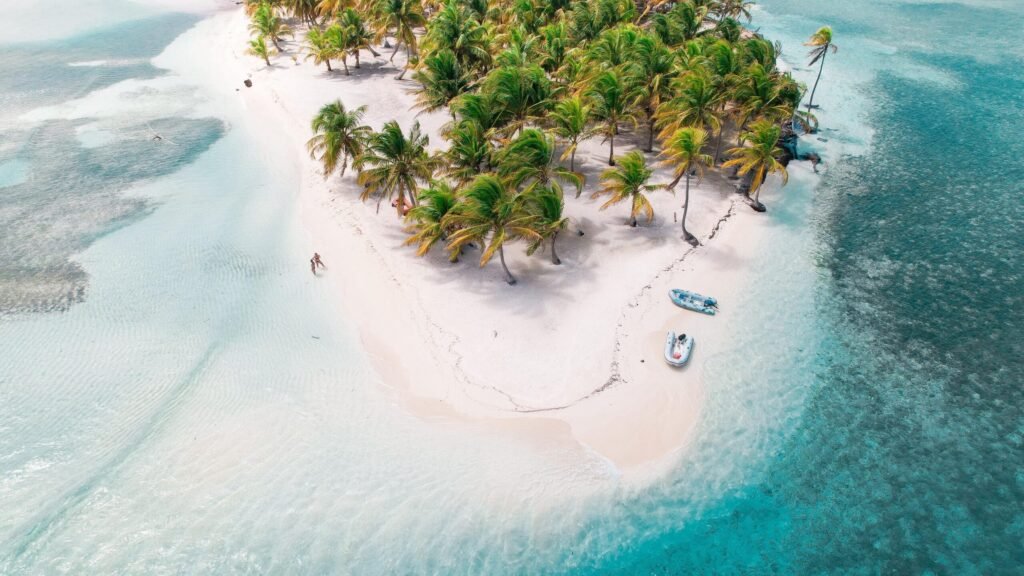
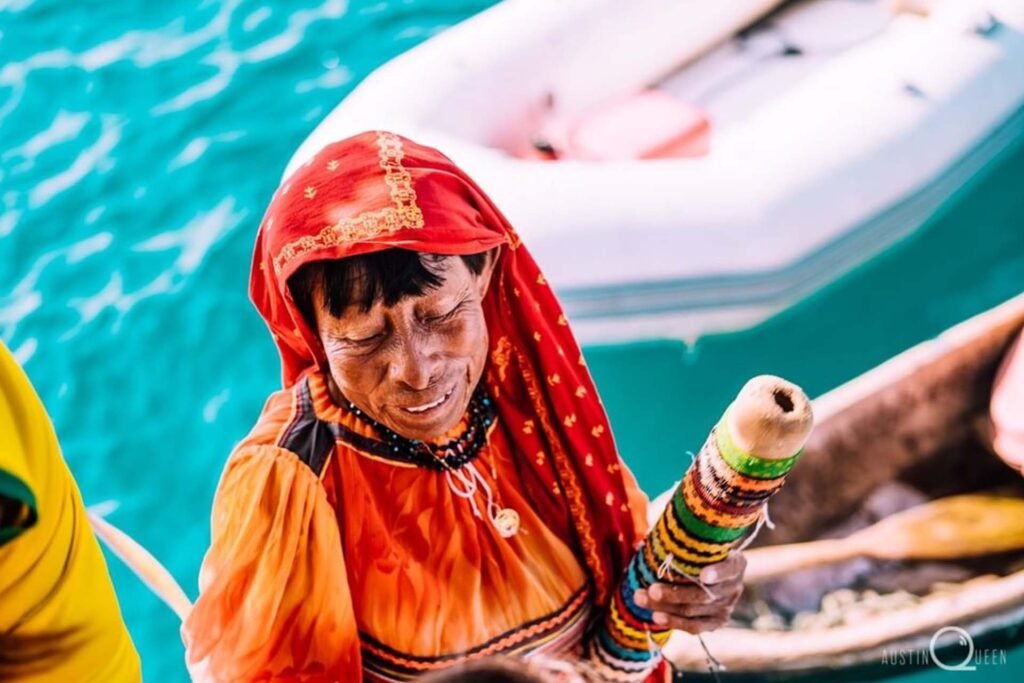
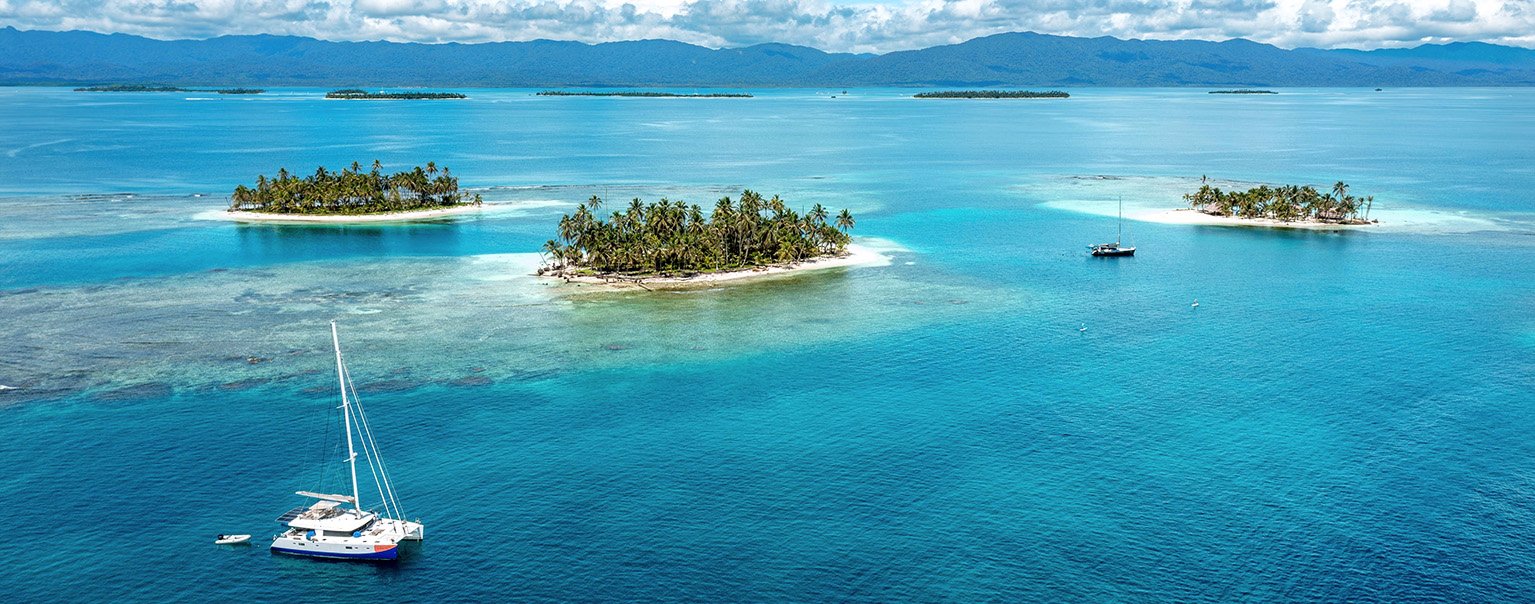
Located within Guna Yala, the San Blas archipelago is made up of hundreds of Caribbean islands and cays, including inhabited islands, remote anchorages, coral reefs and palm-covered beaches.
On the Panama–Colombia sailing route, you spend around three days exploring San Blas, with the boat becoming your floating home.
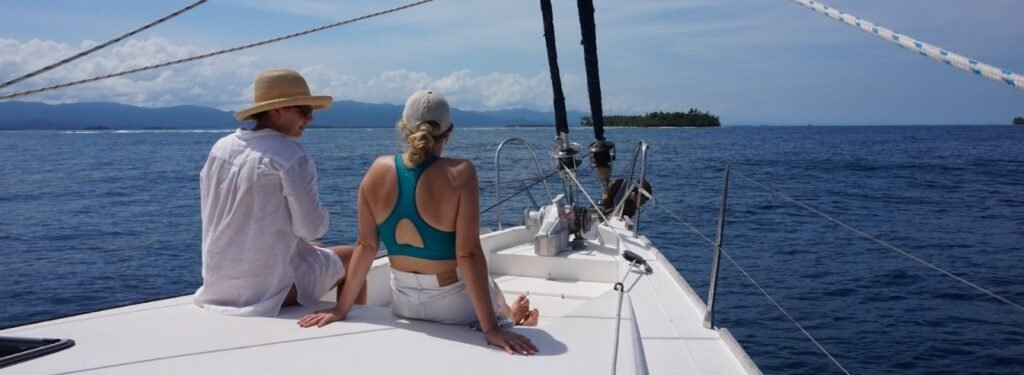
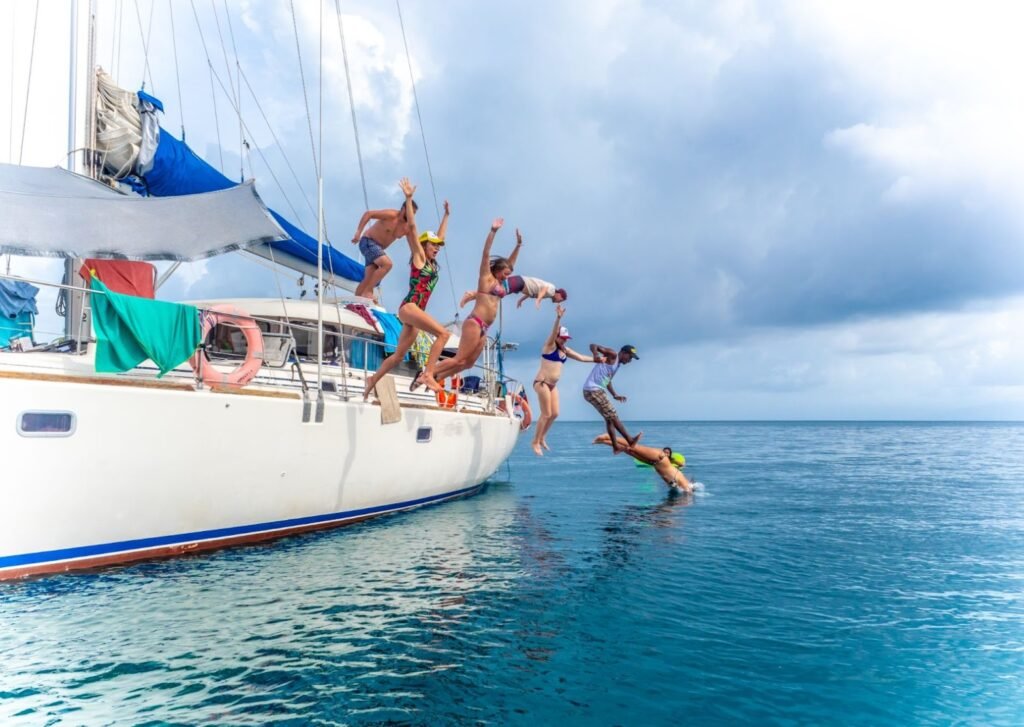
Depending on your itinerary, boat and sea conditions, days may include swimming, snorkeling, visiting islands, relaxing on deck and sharing meals onboard. Instead of staying in one location and arranging daily transfers, you move through different parts of the archipelago while living aboard your sailboat.
After exploring the islands, the journey continues across the open Caribbean Sea toward Cartagena. This offshore passage is part of the sailing experience and may involve extended periods at sea, including overnight navigation.
It’s an important distinction: this isn’t a ferry or a short boat transfer. It’s a multi-day sailing trip that combines island exploration with a blue water crossing.
What’s included in the sailing fare?
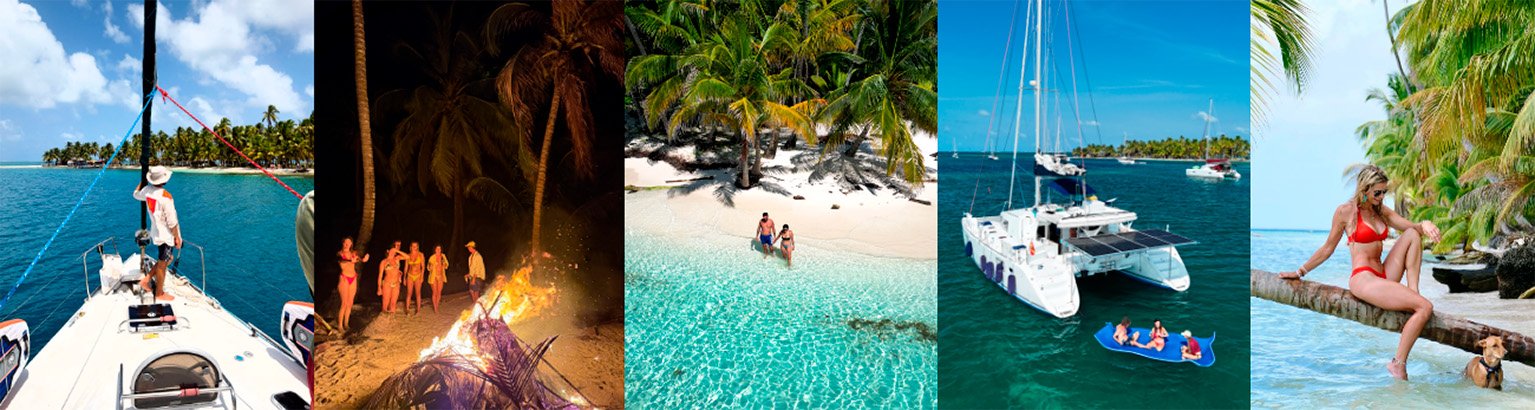
Our Panama–Colombia sailing route generally includes:
- Accommodation onboard for the duration of the journey.
- Three meals a day, plus drinking water, tea and coffee.
- Snorkeling equipment.
- The sailing journey through San Blas and onward to Cartagena.
- Standard immigration coordination for the international crossing.
The boat and crew provide your accommodation and transportation during the sailing journey, so you’re combining several travel expenses into one experience.
What costs should you consider separately?
Not everything is included in the sailing fare. Depending on your departure point and travel arrangements, additional costs may include:
- Shuttle or 4×4 transportation from Panama City to your embarkation point.
- Speedboat transfer to your sailboat in San Blas, when required.
- Guna Yala entrance fees.
- Personal expenses, extra snacks, alcoholic drinks and optional crew tips.
- Travel insurance.
These are worth considering when comparing the total cost of sailing with a flight.
How much does sailing from Panama to Cartagena cost?
Unlike a plane ticket, a sailing fare covers several nights of travel, accommodation and meals, along with time exploring the San Blas Islands.
Prices vary depending on the boat, cabin type, departure date and season. If you’re planning your trip for late 2026 or 2027, there are some special offers worth checking out.
Current sailing fares and promotions:
- Remaining 2026 departures: Selected sailings from US$670 per person.
- 2027 regular fares: Starting from US$850 per person.
- 2027 Early Bird: Save US$75 per person when booking eligible departures by October 31, 2026, with fares starting from US$775. A US$50 early-booking discount is also available on eligible departures through December 2026.
- Black Friday & Cyber Monday: Limited-time offers with discounts of US$75, US$100 or US$125 per person, depending on the 2027 travel month. These special offers replace the regular Early Bird promotion during the promotional period.
All promotions apply to selected departures, are subject to availability and cannot be combined with other offers. Final prices depend on the boat, cabin and travel dates.
👉 For current boat options, fares and availability, see the Panama → Colombia sailing departures.
4. How Does the Panama to Cartagena Sailing Route Work?
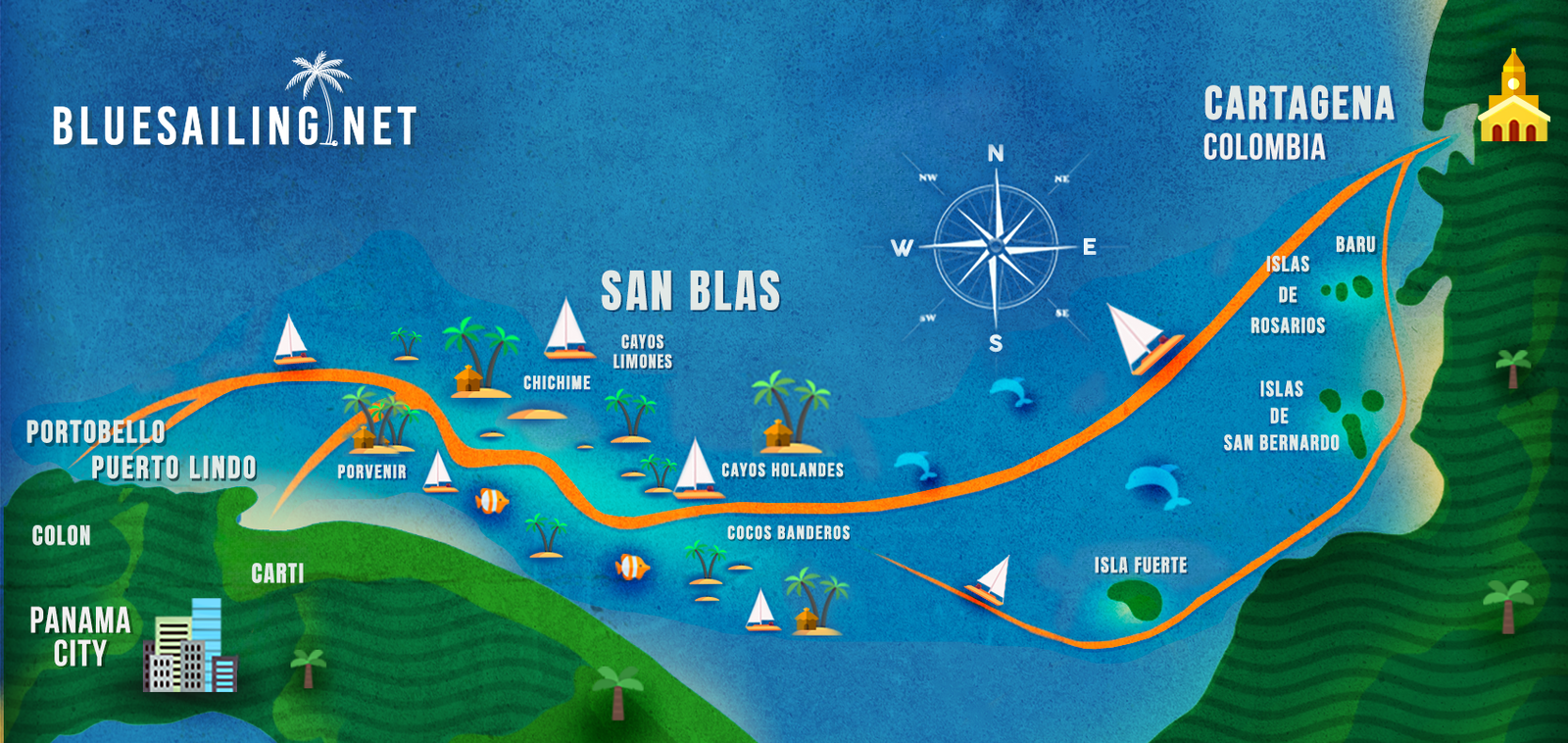
The Panama–Colombia sailing route is a one-way journey, beginning in Panama and ending in Cartagena. Depending on your boat and departure date, you’ll usually board in one of two locations:
Puerto Lindo: A small town on Panama’s Caribbean coast. You can reach it from Panama City by organized shuttle or public transportation. From here, your journey begins by sailboat toward San Blas.
El Porvenir: An island in Guna Yala used by some boats for embarkation and immigration procedures. Reaching it from Panama City generally involves a 4×4 transfer to the Caribbean coast, followed by a local speedboat to meet your sailboat.
We can help coordinate the appropriate transfers according to your boat and departure point. These transfers are arranged separately from the sailing fare.
Once onboard, the journey combines approximately three days exploring the San Blas Islands with the offshore passage to Cartagena. The exact sequence and duration depend on your itinerary and sea conditions.
How flexible do you need to be?
This is one of the biggest practical differences between flying and sailing.
A flight tries to follow a published schedule, although delays and cancellations can still happen. A sailing journey depends more directly on weather, wind, and sea conditions.
Captains may need to adjust routes, departure times or arrival schedules to travel safely.
We recommend allowing at least 24 hours between your expected arrival in Cartagena and any onward flight, ideally 48. If you have a fixed international flight, an important appointment or limited flexibility, this is worth considering before choosing to sail.
👉For more details about embarkation, transportation, immigration, preparation and life onboard, read our Panama to Colombia General Information guide.
5. Should You Fly or Sail from Panama to Cartagena?
There’s no single best option for everyone. The right choice depends on your travel plans, budget, and how much time you have available.
Flying is usually the better option if:
- You want to reach Cartagena as quickly and affordably as possible.
- You have limited vacation days or a fixed schedule.
- You need to connect with another flight soon after arriving.
- You’d rather avoid spending several days on the sea.
Sailing may be the better option if:
- You have 4–5 nights available for the journey.
- You want to explore San Blas without organizing a separate vacation.
- You enjoy sailing, island hopping and the idea of living onboard.
- You want to combine transportation, accommodation, and adventure in one trip.
- Your itinerary allows some flexibility around arrival times.
Both are valid ways to travel between Panama and Colombia. Flying makes sense when reaching Cartagena is your priority. Sailing offers something different if you have the time and want the journey itself to be part of your travels.
6. Who Should Sail Instead of Fly?
If you’re already planning to travel through Panama and Colombia, our recommendation is simple: if you have 4–5 nights to spare, build them into your itinerary instead of treating them as travel time.
The route works for backpackers and solo travelers, but it’s just as good for couples, friends, and small groups looking for something genuinely different. You get five to six days exploring San Blas, the experience of living onboard, and a real open-sea passage before arriving in Cartagena — connecting Central and South America through one of the Caribbean’s most remote destinations.
And that’s really the point. You could fly past everything in between in a little over an hour, or give yourself a few extra days to actually experience it.
If you’re traveling through Latin America, we’d make room for those nights onboard. For many travelers, San Blas becomes one of the parts of their trip that they remember the most.
Don’t just leave five days between Panama and Colombia. Make them one of the highlights of your Latin American adventure.
Ready to make the journey part of the trip?
👉 See upcoming Panama → Colombia departures and find the boat and dates that work for you.
👉 Want more practical details first? Check our General Info.
7. Frequently Asked Questions
- Can you travel from Panama to Colombia by road?
There is no continuous road connecting Panama and Colombia because the Pan-American Highway is interrupted by the Darién Gap. Regular travelers therefore usually continue between the two countries by air or sea. - Is there a ferry from Panama to Cartagena?
There is no conventional passenger ferry operating like a regular bus or train service between Panama City and Cartagena. Multi-day sailing trips are a different type of experience, combining the international crossing with several days exploring San Blas. - Is the Panama to Colombia sailing trip one-way or round trip?
It’s a one-way journey. You begin in Panama, sail through San Blas, and finish in Cartagena, Colombia. If your goal is simply to explore San Blas and return to Panama, a round-trip San Blas charter is a different type of trip. - How long does it take to sail from Panama to Cartagena?
Our Panama–Colombia sailing journey generally takes around 4–5 nights, including several days exploring San Blas and the open-sea section toward Cartagena. Exact timing can vary according to the boat and sailing conditions. - Does this information apply to Cartagena to Panama City as well?
Yes! The same information applies when traveling in the opposite direction, from Colombia to Panama. Flight options and general travel considerations are the same, and we also offer one-way sailing trips from Cartagena, Colombia, to Panama City, including an unforgettable adventure through the stunning San Blas Islands. Whether you choose to fly or sail, you can use this comparison to decide which option best suits your travel plans.