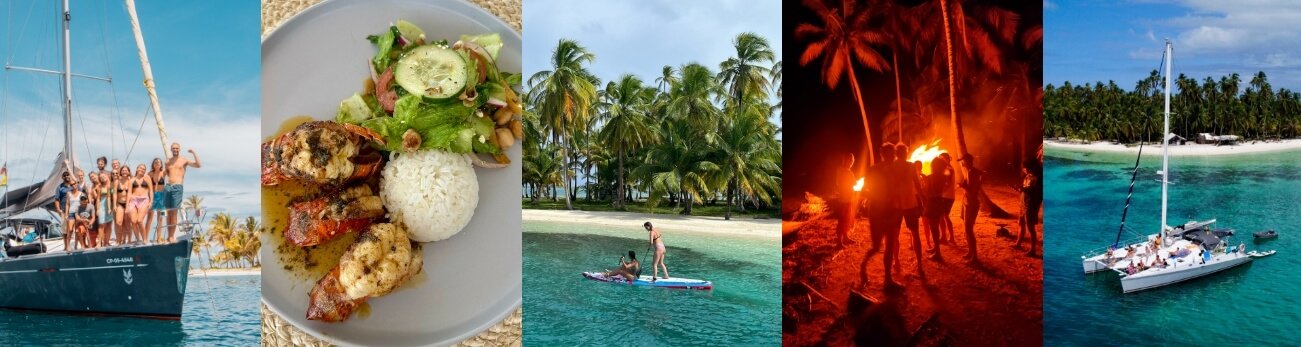
If you’re planning the legendary Cartagena ↔ Panama crossing through the San Blas Islands, you’ve probably come across two main options: sailing trips (sailboats) and speedboat island-hopping tours.
At first glance, they might seem similar… but they’re not.
The difference isn’t just how you travel, but the kind of journey you experience along the way.
Because the routes are so different, many travelers come across claims that can sound tempting at first:
- “90% island time”
- “Skip the open sea”
- “No seasickness”
- “Faster than sailing”
It sounds tempting… but the real difference isn’t simply how many hours you spend on an island, it’s how the journey unfolds.
Here’s an honest, transparent comparison between sailing and speedboats, based on the experience of thousands of travelers who have crossed the Cartagena ↔ Panama San Blas route with us since 2012, together with captains who have sailed these waters for more than 25 years and know the San Blas archipelago far beyond the usual routes.
Table of Contents
- Quick Summary: Sailing vs Speedboat in San Blas
- San Blas Speedboat Crossing: What the Trip Is Really Like
- The Hidden Costs of Speedboats
- Sailing San Blas Trip: What the Experience Is Really Like
- Sailing Across the Entire San Blas Archipelago
- The Big San Blas Myth: “90% Island Time”
- What About Seasickness?
- The Secret Nobody Tells You About San Blas Sailing
- Different Ways of Supporting the Guna Community
- Final Verdict: Sailing vs Speedboat in San Blas
- About This Colombia–Panama Guide
- FAQs
1. Quick Summary: Sailing vs Speedboat in San Blas
Both trips visit San Blas, but the way you experience it is completely different.
| Sailing | Speedboats |
|
|
2. San Blas Speedboat Crossing: What the Trip Is Really Like
Speedboat tours on the Panama–Colombia San Blas crossing are designed mainly for fast island transfers close to the coast. Travelers move between islands by motorboat and sleep in basic huts or hammocks on land.
Because these boats operate near the mainland, the route follows a coastal path toward the Colombia–Panama border, rather than crossing the open sea.
The geography of the region also plays a role: the Darién Gap is an impenetrable jungle with no roads, and small motorboats are not designed for long open-sea navigation. As a result, the journey is divided into multiple segments and connections, following a coastal route.
For people looking for a simpler and more rustic island experience, this style of trip can still be enjoyable, just with a different rhythm and setup.
What it usually includes:
- 3 nights on coastal village islands
- Multiple bumpy speedboat transfers between islands
- Packing and unpacking every day.
- Simple hammock accommodation (sand, heat, mosquitoes).
- One long speedboat travel day toward Puerto Obaldía.
- End of the organized route in Capurganá, near the Colombia–Panama border.
- Limited shade and little space to rest during navigation.
- No bathroom, no drinking water included, and often one less full day of the trip.
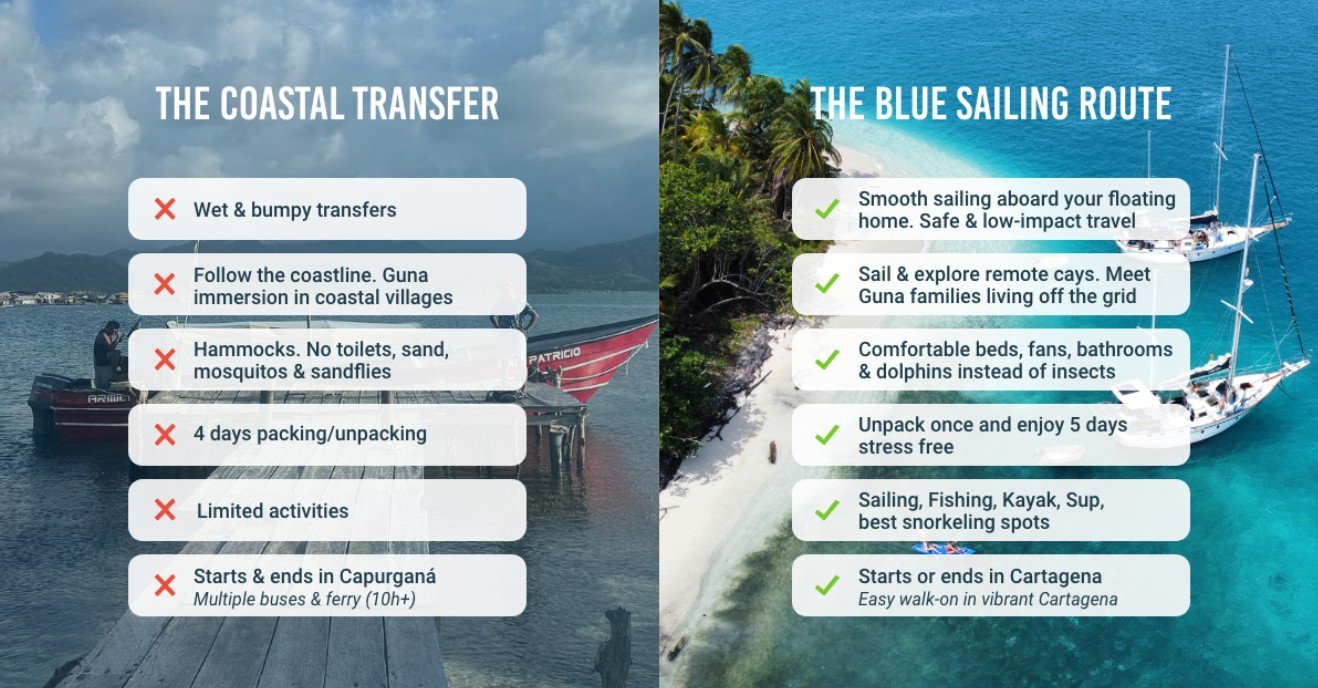
These trips focus primarily on coastal island hopping, rather than the sailing journey itself.
3. The Hidden Costs of Speedboats on the Panama – Colombia San Blas Crossing
Speedboat trips often appear cheaper at first. But there is an important logistical difference.
Speedboats do not reach Cartagena. They drop you in Capurganá, a tiny border town with no airport, no roads, no direct transport, and unreliable departure schedules, so you can lose a full day of your trip waiting for connections, switching transport, carrying wet bags and finding last-minute accommodation.
From Capurgana, where the organized route ends, speedboat travelers must continue independently and:
- Take another boat to Necoclí
- Then a bus to Medellín or Montería
- Then a flight or additional transport to Cartagena
- Often with an overnight stay because connections rarely match
What speedboats save by skipping the open sea, travelers often spend again on land transfers. Based on traveler feedback and route logistics, the total cost and travel time tend to even out or even increase once you add the extra connections. In the end, you’re still covering the same distance, just along the coast instead of across the archipelago.
Sailing trips, in contrast, arrive and depart directly in Cartagena, without the need for additional transfers or connections.
Speedboats skip the open sea.
Sailing turns it into the highlight of the journey.
4. Sailing San Blas Trip: What the Experience Is Really Like
Sailing is not transportation. It’s a lifestyle.
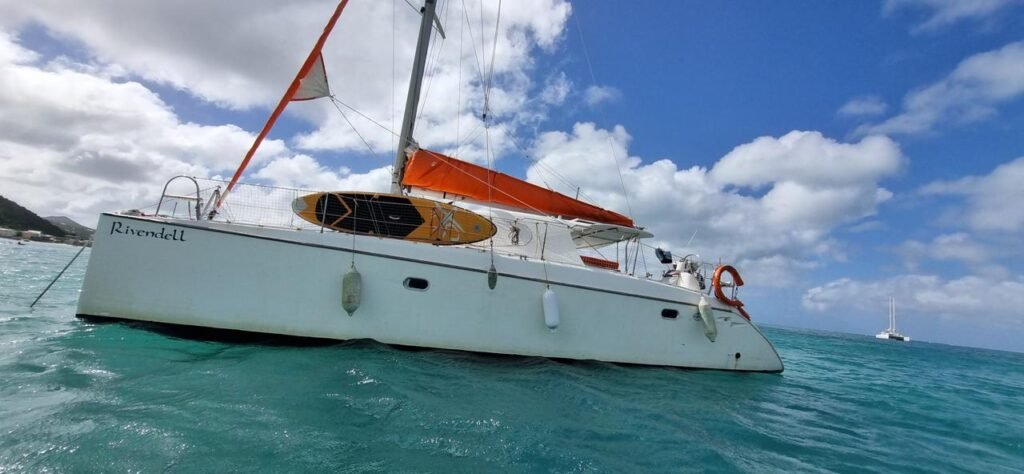
Your sailboat becomes a floating home while you explore the islands.
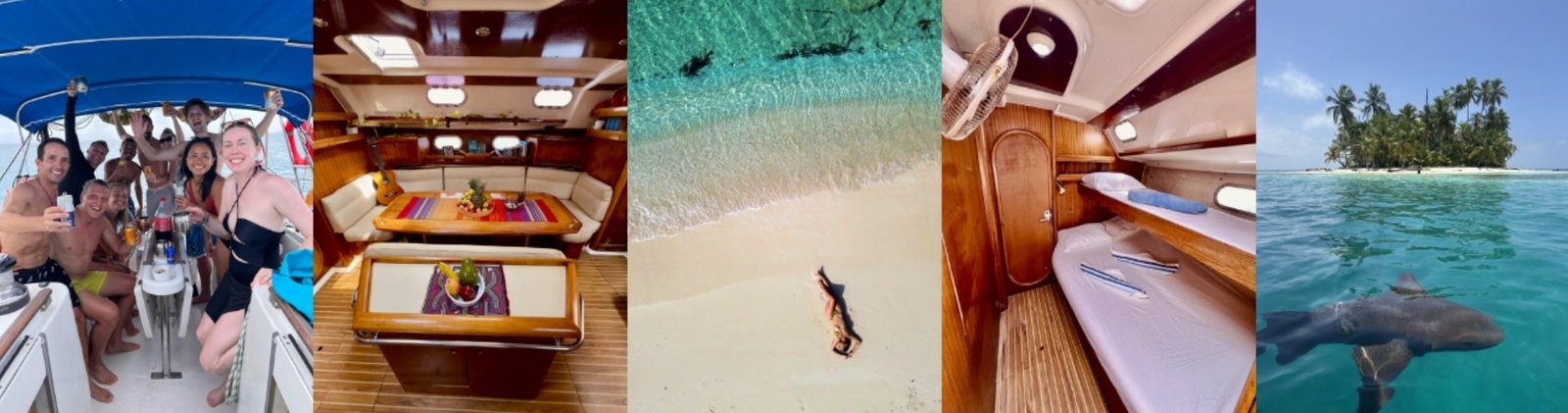
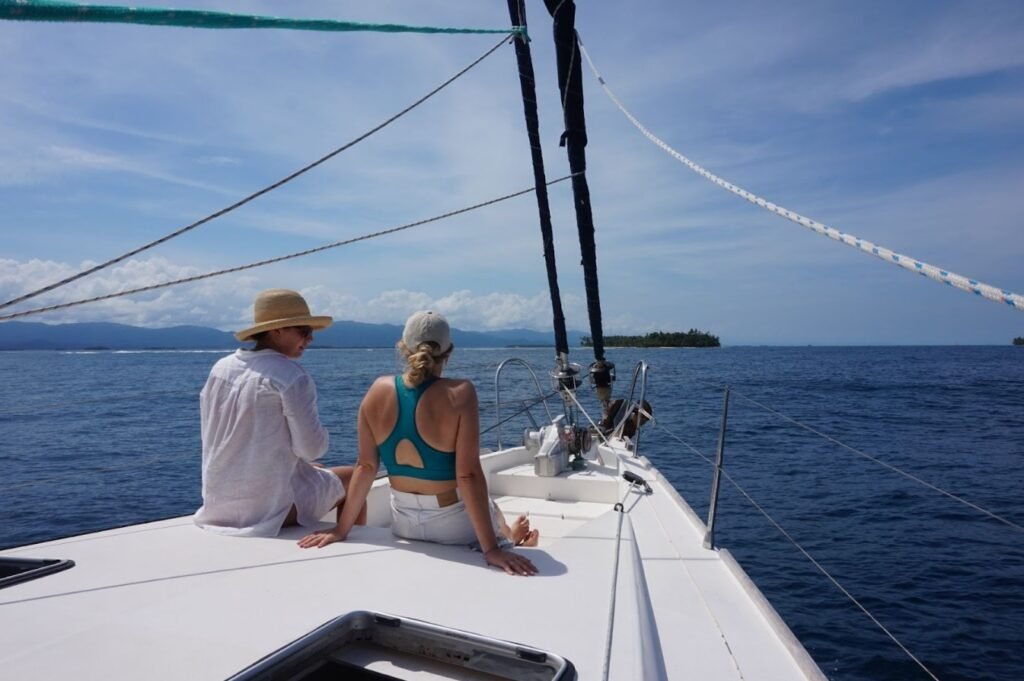
You sleep onboard, share meals with the crew and other travelers, wake up anchored in new places, and move across the archipelago at the rhythm of wind and sea.
- Your floating home: A real bed with fans, bathrooms, electricity to charge your devices, shade, sea breeze and space to relax. Your backpack stays dry, your things stay organized, and there’s no packing and unpacking every day. It’s comfort without sand, mosquitoes or rushing. The perfect balance between exploring islands and enjoying life at sea.
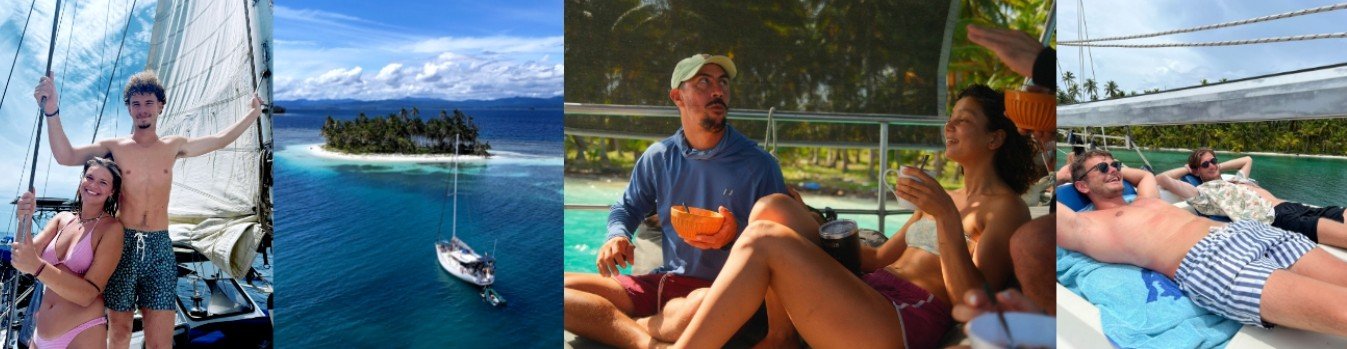
- Remote islands across the archipelago: Each day you sail to a different type of cay, from remote outer islands in the north that feel almost private, to livelier central spots and favorite sailing anchorages where boats gather. Along the way, you explore different sides of San Blas, all chosen by the captain based on conditions and the vibe of the group.
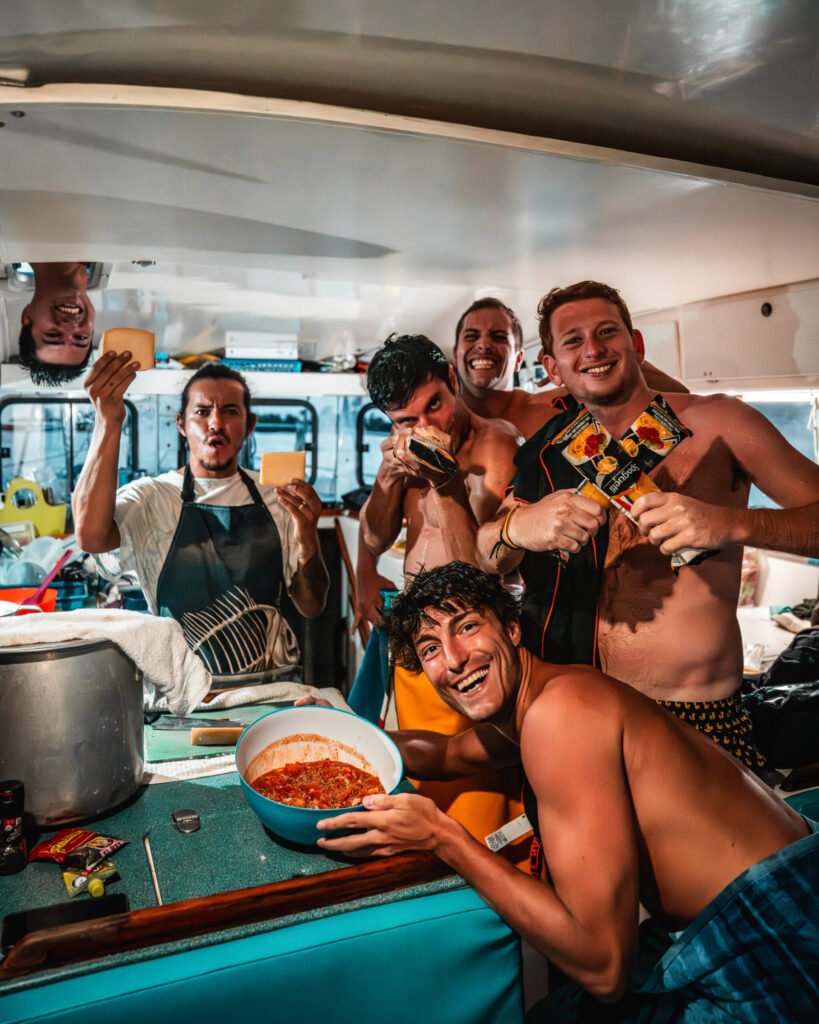
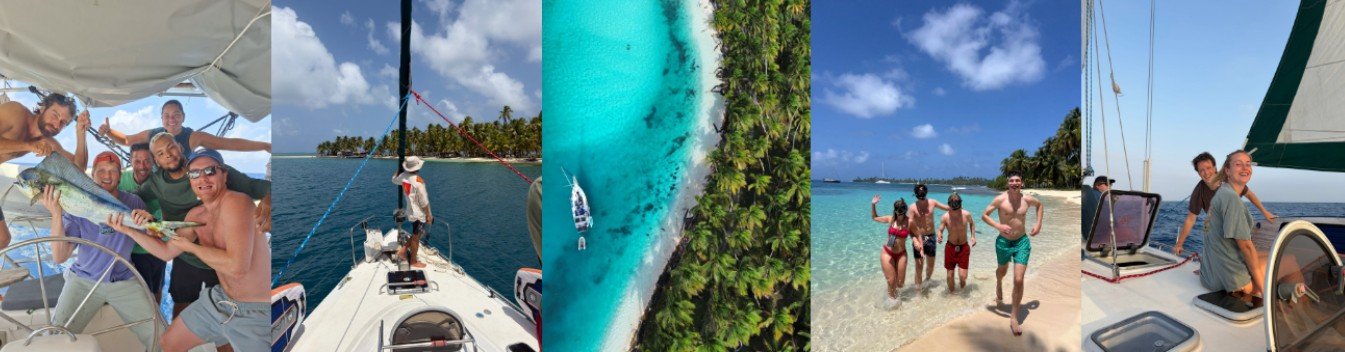
- Fresh meals cooked onboard: Our boats have real kitchens and refrigerators, like a small floating home. We bring fresh ingredients like fruits, vegetables, meats and ice and cook onboard in the galley. When conditions allow, we sometimes prepare meals on the islands or enjoy a beach BBQ. Along the way we also fish or buy fresh fish and lobster from local Guna fishermen.
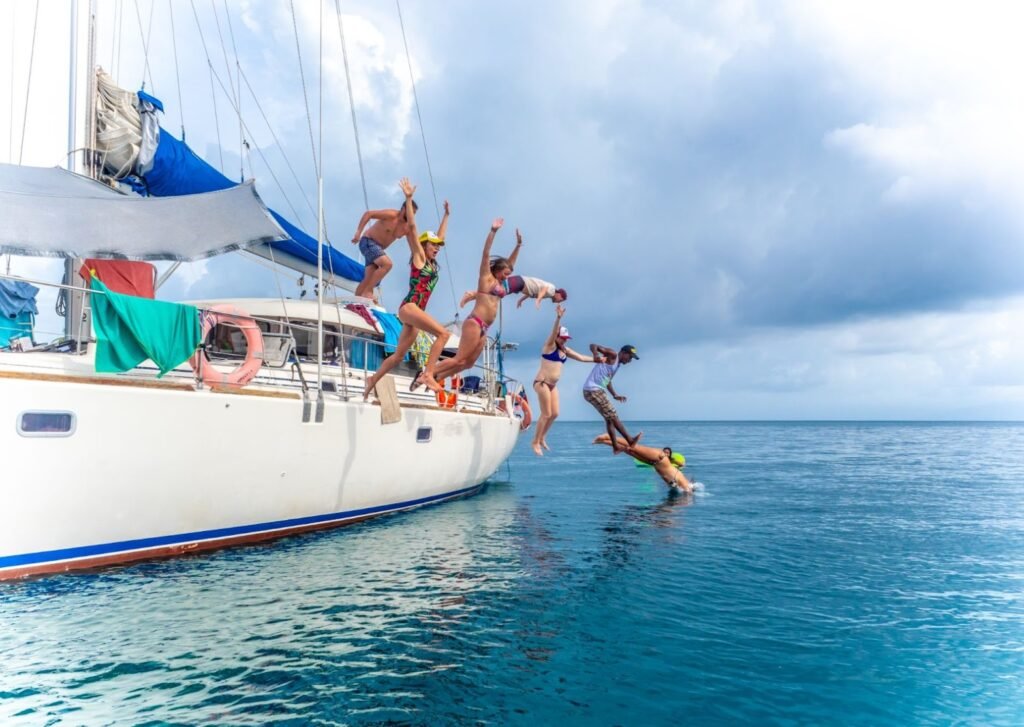
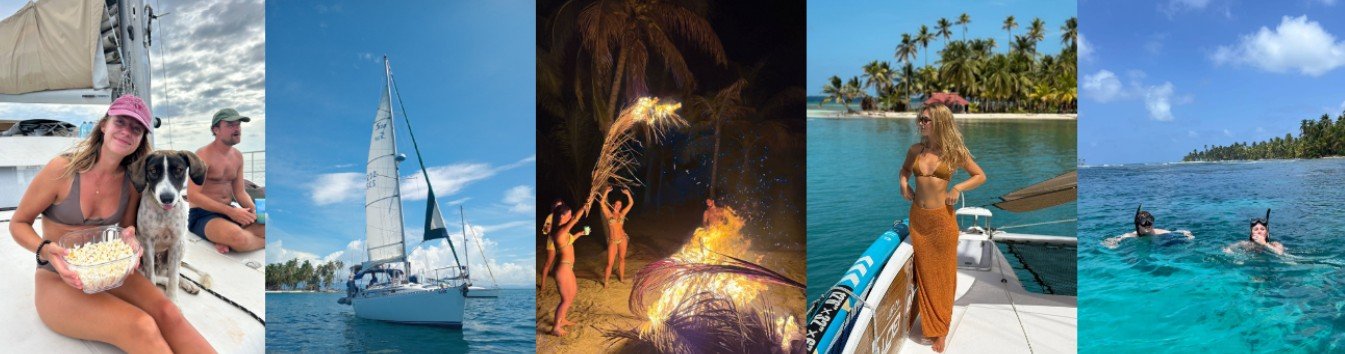
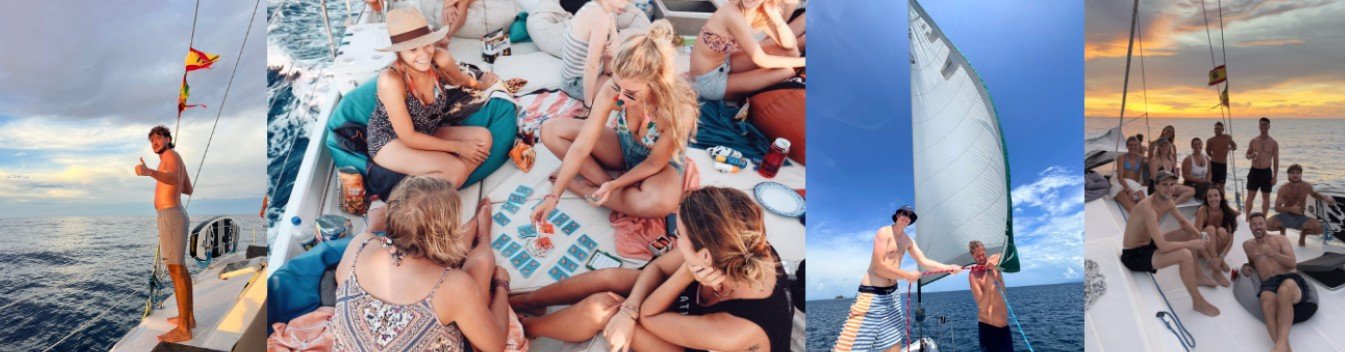
- The magic between islands: Sunrise coffee on deck, snorkeling anytime, reading in the breeze, learning a bit of sailing, watching dolphins, fishing off the stern, sunset swims or even jumping in for a “sunset shower.” Some evenings people play cards, share music or simply watch the stars after a long day between islands.
- One route. Two countries: From Puerto Lindo and the San Blas Islands to Cartagena, this one-way journey can start on either side, blending nature, culture and Caribbean life.
This is the part nobody expects to love and the part everyone remembers forever.
You don’t just visit beaches, you experience life at sea.
5. Sailing Across the entire San Blas Archipelago 🌴
One of the biggest differences between sailing and speedboats on the San Blas crossing is the route itself.
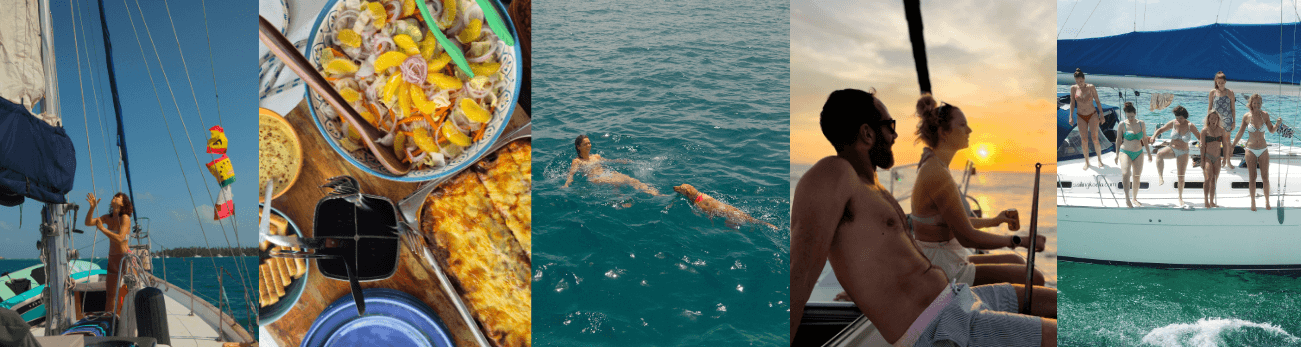
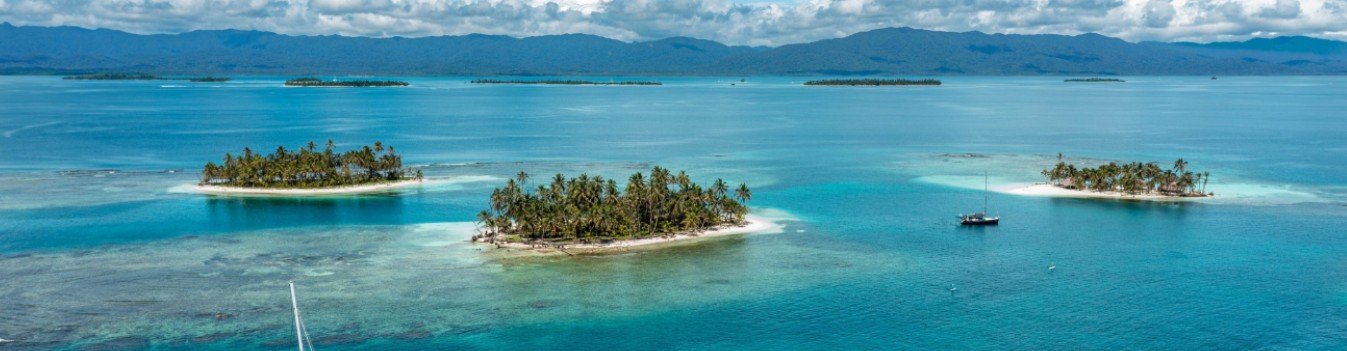
Sailboats cross the San Blas archipelago from one end to the other, allowing you to experience a wide variety of islands. From the most remote outer cays in the north, far from the mainland, to more central islands and well-known sailing anchorages.
Routes may include outer reef areas like the Dutch Cays (Cayos Holandeses) — including Cocobandero, Waisalardup, banedup or Ogoppuquidup, as well as central islands such as Cayos Limones, and favorite sailing anchorages like Chichime or Nugnugdup.
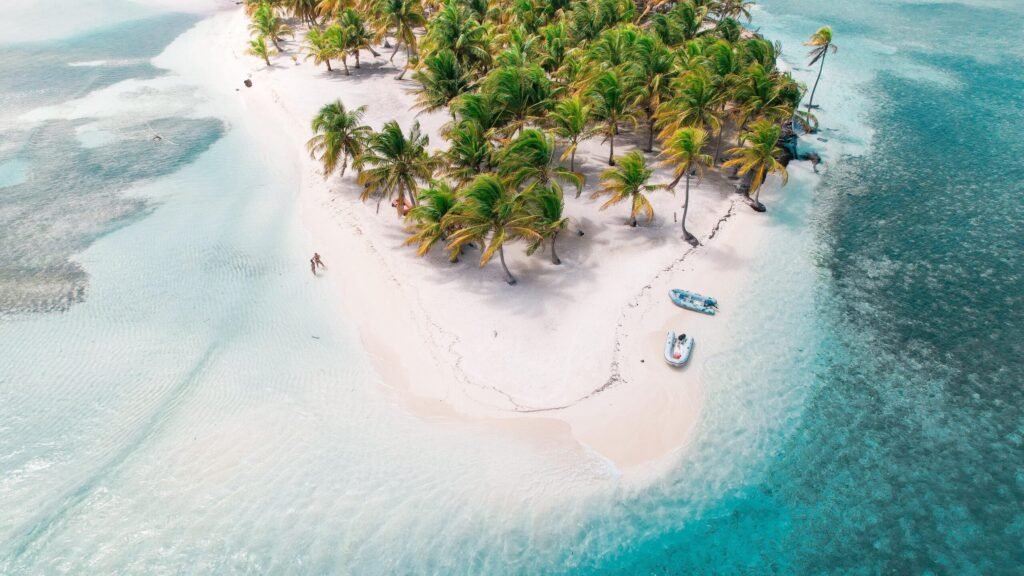
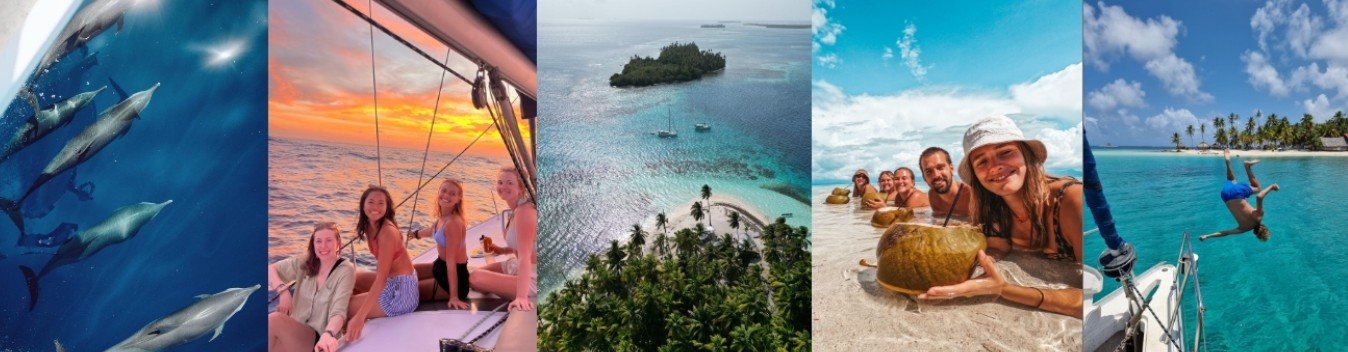
In the northern outer cays, some islands feel completely untouched — tiny strips of white sand surrounded by turquoise water, often with just one Guna family living there. These places can feel like your own private island, and they’re also among the best snorkeling spots in San Blas, with coral reefs, colorful fish and occasionally small reef sharks.
As you move through the archipelago, the scenery and energy naturally shift. Some islands have more life, more boats and more interaction between travelers, while others remain quiet and remote.
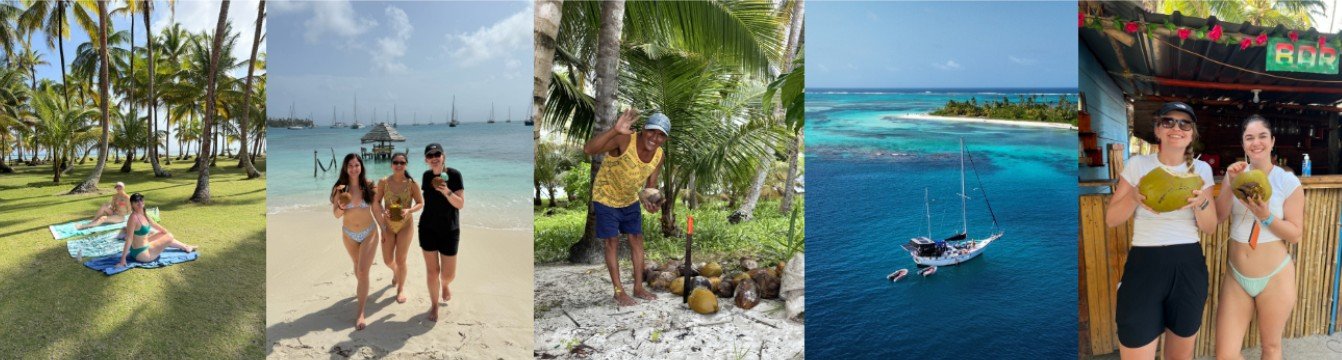
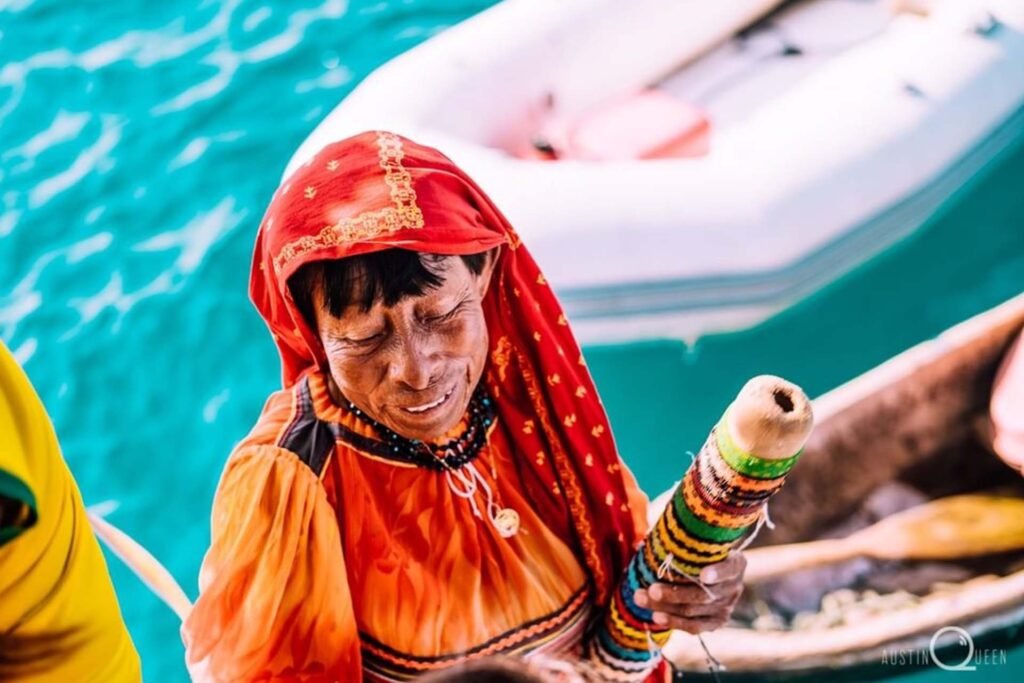
Along the way, you also connect with Guna families in a natural, everyday way. You might visit a small island where a family prepares fresh coconut rice and smoked fish, buy lobster and fish directly from local fishermen, or find handmade molas and crafts made right there on the island.
Because sailboats move with wind and engine support, captains can shape the route day by day, selecting the best anchorages based on swell, currents, snorkeling visibility, mosquito activity and overall conditions. They can also navigate around occasional patches of sargassum that may appear in parts of the Caribbean.
This flexibility creates a more dynamic journey across the entire San Blas archipelago, where no two sailing trips are exactly the same.
Speedboat routes, in contrast, tend to stay closer to the mainland, visiting more frequently traveled islands.
Sailing allows you to experience a wider, more remote and more pristine side of San Blas. Not just the islands, but the life around them.
Be Salty, Live Tasty!
👉 Choose your San Blas Sailing Boat
👉 Let’s find your perfect sailing date — Write us on WhatsApp!
6. The Big San Blas Myth: “90% of Your Time in the Islands”
Many speedboat tours and island-hopping trips advertise that you’ll spend “90% of the time on islands.” But the real question isn’t simply how many hours you spend on land, it’s how you experience the islands and the sea around them.
- Speedboats offer a different kind of experience. They remove the open-sea sailing passage and focus more on transport between coastal islands, with stays in village huts or hammocks.
- Sailing doesn’t mean “less islands” or “less time on the islands.” It means better islands and the magic in between them.
Before sailing, most people assume the island will be the highlight. But once they experience the journey, they discover that the real magic is living on the water — watching a new paradise appear every morning, spending the day on deck or on the beach, swimming, kayaking, snorkeling, or moving at their own rhythm.
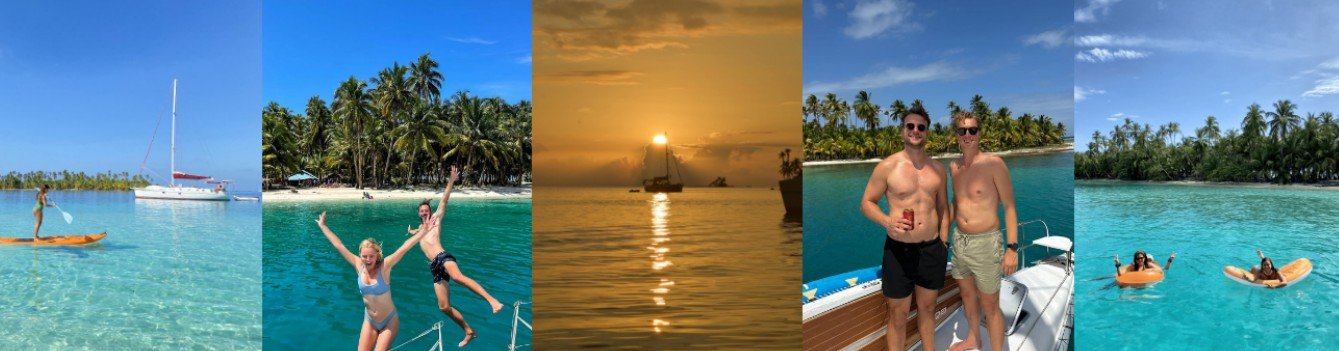
And here’s the part nobody expects: after exploring the islands, travelers naturally drift back to the boat. For the comfort, the breeze, the panoramic turquoise-water views, the floating-home feeling, and the freedom to jump straight into the sea whenever they want.
Sailing doesn’t reduce your island time, it adds everything the islands alone can’t give you.
7. What about seasickness?
One of the reasons some tours promote “no open ocean crossing” is the fear of seasickness. In reality, motion sickness depends mostly on personal sensitivity and sea conditions and it can happen in cars, buses, speedboats or sailboats.
Some travelers feel it, others don’t. So, if you’re not sure how your body reacts to the sea, the safest approach is to take seasickness medication such as Mareol or Dramamine about 1–2 hours before departure, whether you’re traveling by sailboat or speedboat in the San Blas crossing.
Captains and crew are also used to helping passengers during the first hours of the crossing. They keep an eye on everyone, suggest the best places to sit or rest, and often prepare simple fresh meals or light foods that are easier on the stomach.
On sailboats, your body adapts more easily: you can move around the deck, sit in the shade, look at the horizon or lie down — all of which help reduce discomfort. And if seasickness appears, it usually fades after the first hours and is rarely felt once you reach the islands.
8. The Secret Nobody Tells You About San Blas Sailing 💙
Most travelers don’t realize it until they’re onboard: the Cartagena–Panama sailing route across the San Blas Islands covers more than 210 nautical miles, making it one of the rarest and most authentic sailing experiences in the world where you can combine in just a few days:
- Remote tropical islands
- A real open-sea sailing passage
- A multi-day expedition
- A floating home
- And small-group boat life
It’s one of those moments where you feel like a true sailor, not just a traveler.
The kind of journey many dream about… and here, you get to live it with comfort, great food, sunsets onboard, and captains who know this route like home.
Here’s what travelers discover only after the Colombia—Panama sailboat trip:
✔️ You can learn the basics of sailing: If you’re curious, captains happily share how life at sea works — from steering and reading the wind to practicing simple knots or helping set the sails. You decide how much you want to get involved.
✔️ You earn internationally valid nautical miles: During the open sea crossing, you accumulate more than 210 nautical miles that are officially recognized by sailing schools, federations and maritime programs worldwide.
✔️ You fall in love with sailing: many travelers go home and keep the sea in their lives: they buy a sailboat and continue the adventure in their country. Some stay as volunteers, learn onboard, and eventually become part of our team — including several captains on today’s route.
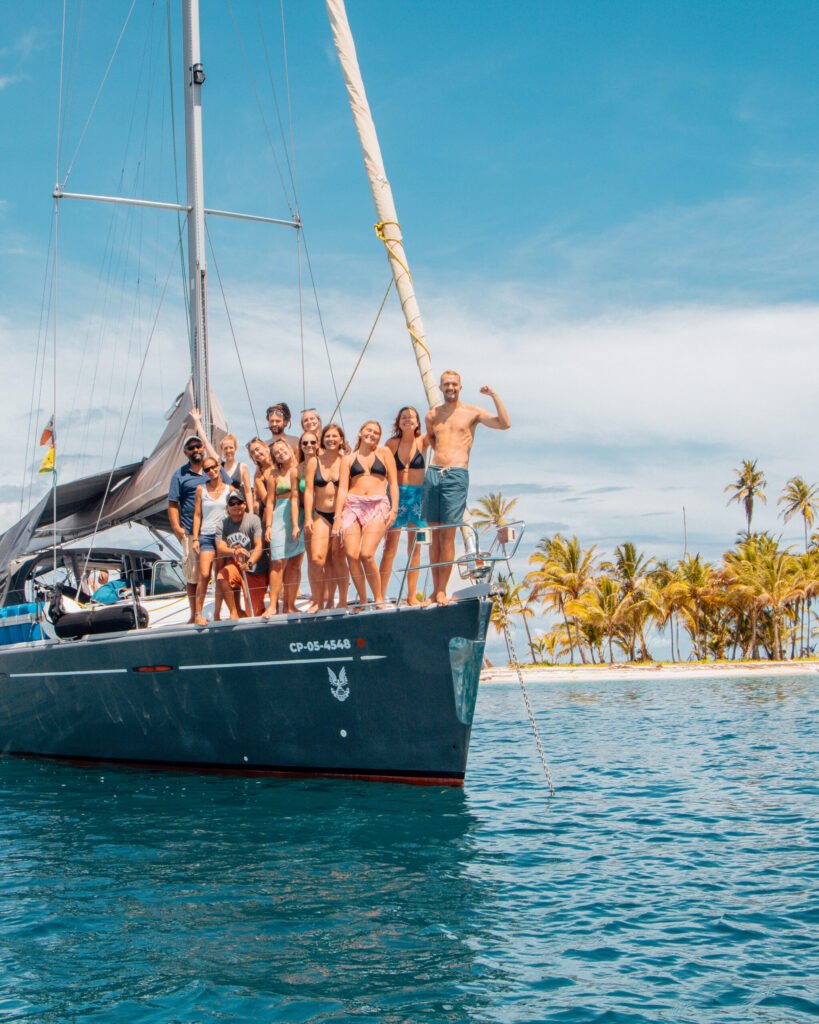
✔️ Instant community vibe: Living at sea unites people instantly. Passengers, captain & crew become a family from day one; people arrive alone and leave with sailmates for life.
It’s the kind of detail that stays with you.
You don’t just visit San Blas, you grow as a sailor.
⭐ Ready to See Sailboat Departures?
Check boats and updated departures for your dates:
👉 Explore Colombia → Panama departures
👉 Explore Panama → Colombia departures
👉 Talk to us on WhatsApp
9. Different Ways of Supporting the Guna Community
San Blas is the autonomous territory of the Guna people, and tourism plays an important role in supporting local island families.
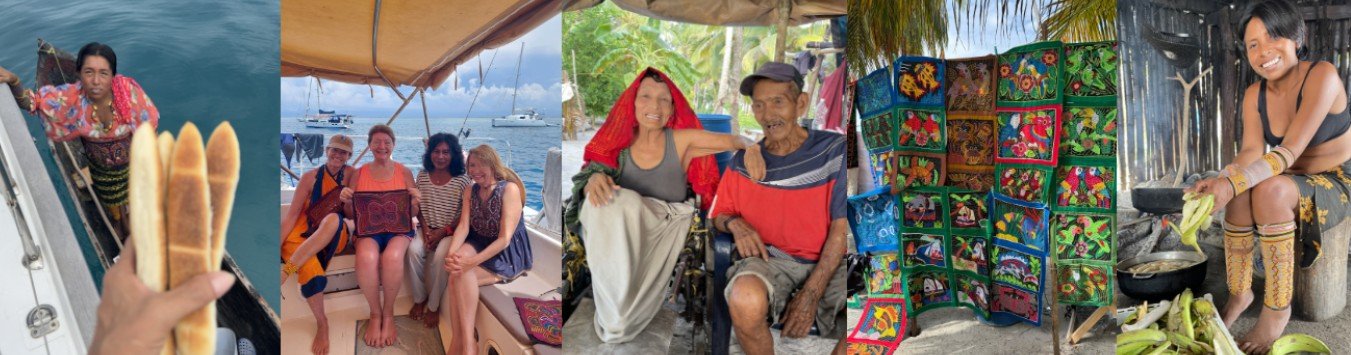
Different types of trips interact with the communities in different ways. Some tours focus more on village immersion, where travelers stay in simple huts on inhabited islands and spend more time within the local community environment.
Sailing journeys have a different rhythm and a different kind of impact. We reach remote Guna families across the entire San Blas archipelago. Our route takes you to tiny, untouched islands that are rarely visited by speedboat routes. These families rarely receive tourism income, so your visit truly supports them in a meaningful way.
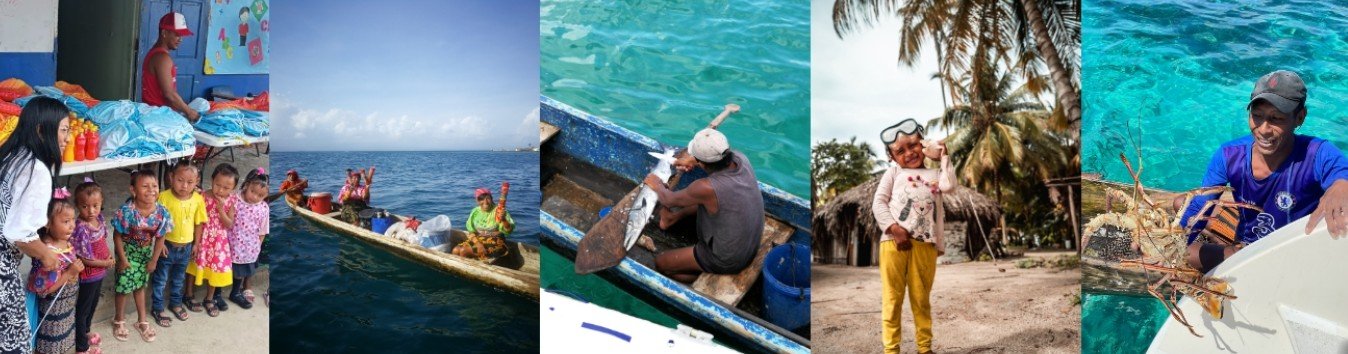
✔️ We distribute income, not concentrate it:
Sailing spreads economic support across the archipelago: remote coconut farmers, fishermen, families on single-island cays, guardians of islets no tourist ever sees, and people selling provisions far from the tourist circuit. This creates healthy, respectful tourism flows instead of saturating the same few islands.
✔️ We don’t sleep in Guna houses:
We sleep on the sea, not on the islands. This protects their privacy, culture, sacred spaces and daily life. You visit, share and connect without disrupting their home and rhythm.
✔️ We take ALL trash back to port:
Every boat in our fleet follows one rule: nothing stays on the islands — everything returns to mainland ports. We often leave beaches cleaner than we found them.
✔️ You support independent captains, not corporations:
Blue Sailing is not a corporate chain or a foreign-backed operation. Our fleet is made up of independent captains who have sailed this route for 25 years.
They’ve built long-standing relationships with Guna families and actively protect the route from becoming over-commercialized.
For them, sailing is not a business model, it’s a way of life.
For that reason, we intentionally keep our fleet small. Our goal is not to scale, but to preserve the authenticity of the San Blas experience and keep it in the hands of the people who have cared for it from the beginning.
When you travel with us, you support:
✔️ A community, not a corporation.
✔️ A tradition, not a trend.
✔️ Real sailors, not outsourced crews.
✔️ Remote island families, not mass tourism.
It’s a lifestyle worth preserving.
And above all, you share the journey with people who care: captains, crew, travelers and island families, all united by the same love for the sea.
10. Final Verdict: Sailing vs Speedboat in San Blas
Both options allow you to explore the San Blas Islands. But they are very different types of travel experiences.
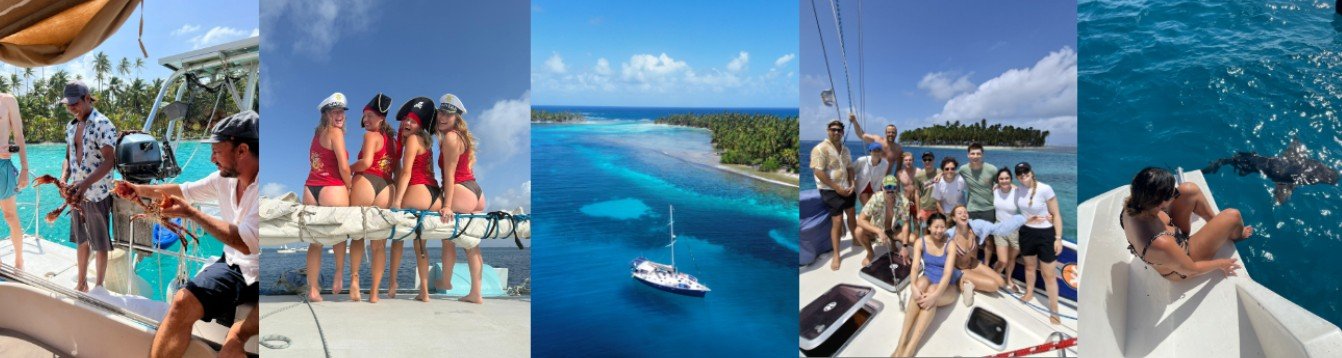
- Speedboats focus on faster transport between coastal islands, with stays in Guna village communities and simple accommodation in hammocks or basic beach huts.
- Sailing offers the best of both worlds: the comfort of a floating home and a full Caribbean journey across the archipelago, with remote islands, 210+ nautical miles, and direct arrival in Cartagena, one of the Caribbean’s most iconic destinations.
You may come for the islands.
But many travelers discover they stay for the boat.
11. About This Colombia–Panama Guide
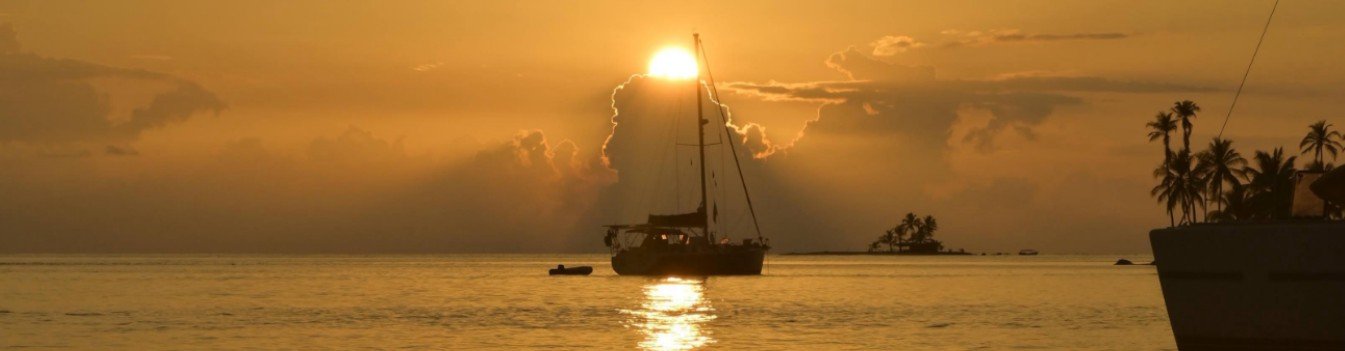
This guide was created by Priscila Troxler, part of the Blue Sailing team, who has experienced this route firsthand since 2016, sailing across the San Blas Islands and the Cartagena–Panama crossing as a crew member on multiple boats, guiding travelers, and working closely with the captains who navigate it.
It is also built on the experience of thousands of travelers who have completed the Colombia–Panama San Blas route with us since 2012, combined with real reviews from platforms like Google and TripAdvisor. It reflects a deep understanding of how both sailing and speedboat routes operate across the region, shaped by real journeys and route logistics.
Our fleet is made up of independent captains who have sailed these waters for over 25 years, maintaining long-standing relationships across the archipelago.
The goal of this guide is simple: to offer a clear and honest comparison of how these routes work, so you can choose the experience that fits you best.
⚓️ Ready to Live the San Blas Sailing Life?
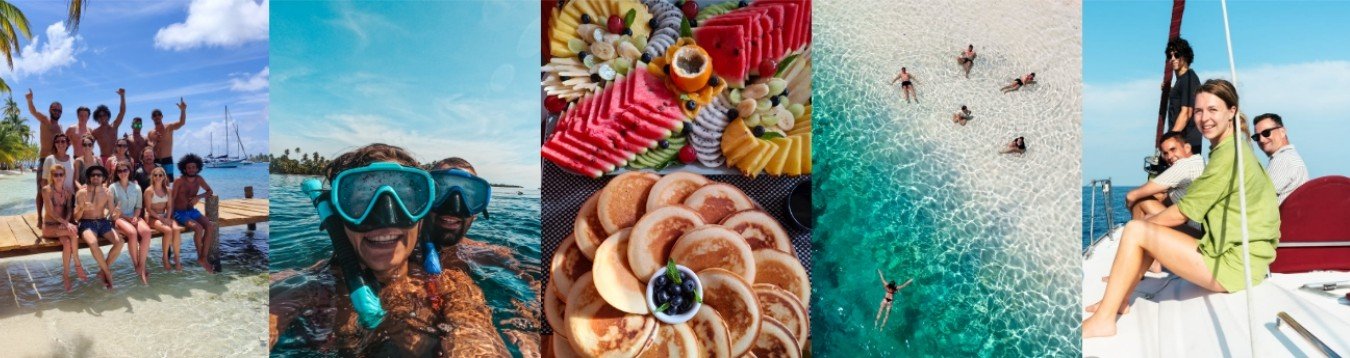
Explore our sailing routes between Cartagena and Panama through the San Blas Islands, choose your boat, and start your own caribbean adventure.
👉 See Colombia → Panama departures
👉 See Panama → Colombia departures
👉 Chat with our team on WhatsApp
12. FAQs
- Is it better to sail or take a speedboat in San Blas? It depends on the experience you want. Sailing offers a multi-day journey with remote islands, open-sea navigation, meals and beds onboard. Speedboats focus on faster coastal island transfers with simple accommodation on land.
- How long does the Panama to Cartagena sailing trip take? Most sailing trips last 5 nights, including around 3 days exploring the islands and 26–52 hours of open-sea sailing, depending on weather and sea conditions.
- Where do San Blas sailing trips depart from? Departures from Panama take place from authorized ports in the San Blas area or Puerto Lindo (depending on the boat and date). We coordinate your transport from Panama City to the departure point, making the process simple and organized.
Departures from Colombia take place directly from Cartagena, usually from Club Náutico in Manga — a calm marina just minutes from Getsemani and the Old City. - Where do San Blas sailing trips arrive? Trips from Panama arrive directly in Cartagena, docking at Club Náutico in Manga, a calm marina just minutes from Getsemani and the Old City. Trips toward Panama arrive at authorized ports in the San Blas area or Puerto Lindo (depending on the boat and route), with organized transfers to Panama City.
- How long do San Blas speedboats actually travel? A typical San Blas speedboat trip lasts about 4 nights. Most itineraries include around three days exploring village islands near the mainland, with short daily boat rides and overnight stays in simple huts or hammocks.
The longest travel segment usually happens either at the beginning or the end of the trip (depending on the direction), with a continuous speedboat ride of about 7–9 hours toward Puerto Obaldía, followed the next morning by another 1.5–2.5 hours to reach Colombia (Capurganá or Necoclí), where the organized tour ends. From there, travelers continue independently with connections to cities like Medellín or Cartagena. - Do people get seasick sailing between Colombia and Panama? Some people can, but most travelers don’t — especially when they take seasickness medication 2 hours before the open-sea section. If it appears, it usually fades after the first hours. For more details, check our full seasickness guide.